A book by Yuzheng Sun

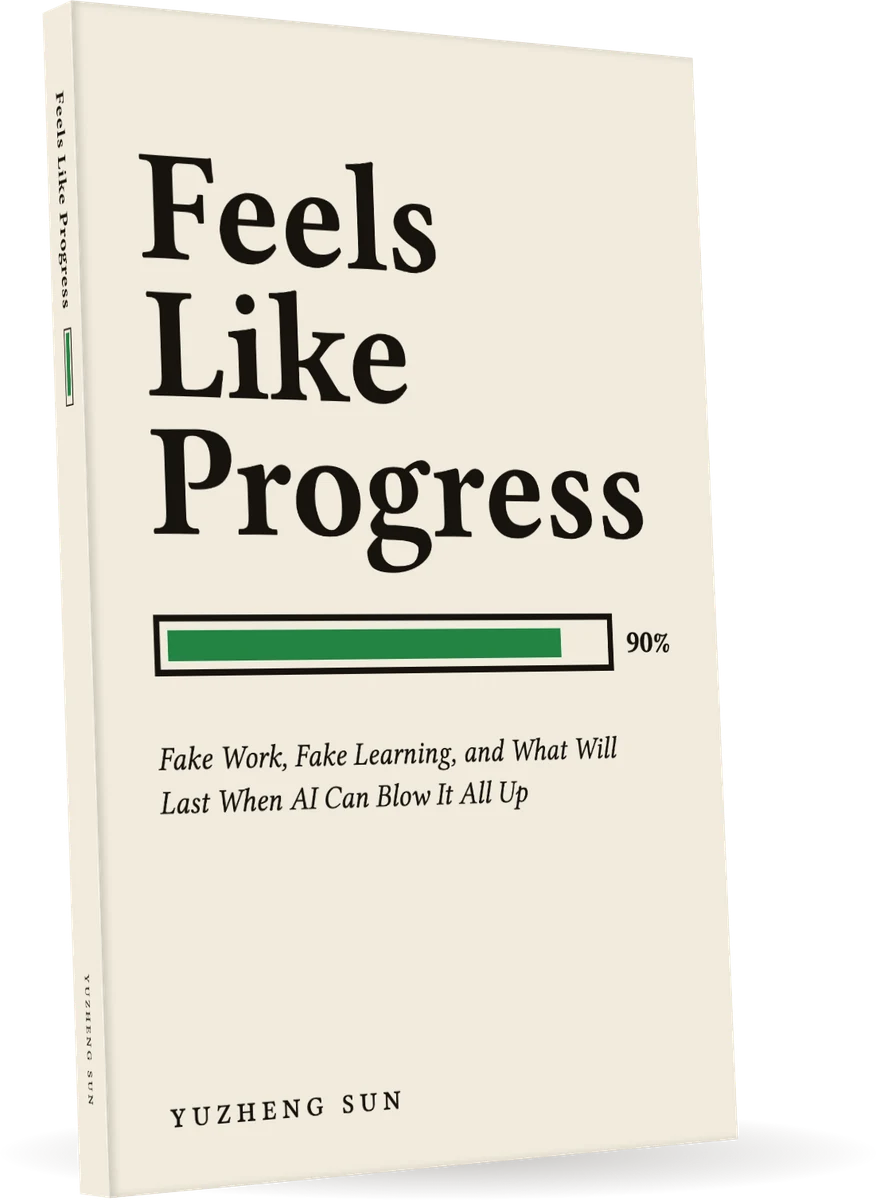
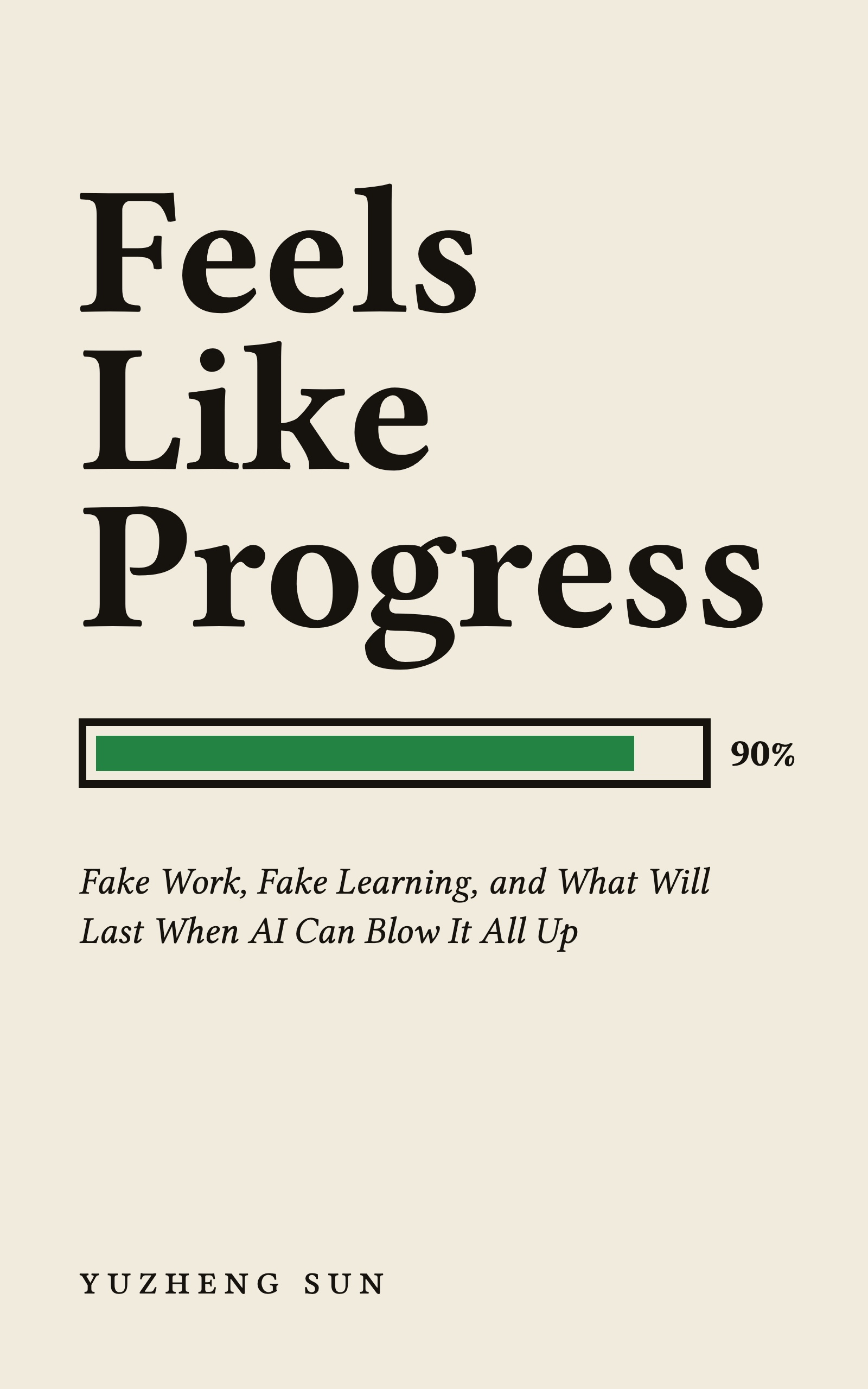
Feels Like Progress

Fake work, fake learning, and what will last when AI can blow it all up

Fake work produces the evidence of work. Fake learning produces the evidence of learning. AI can now produce both in a minute or two: the report, the deck, the code, the polished answer.

First it will inflate fake work. Then it will destroy much of what that evidence was worth. This book is about what will last.

Paperback $18.88 · Ebook $8.88

The argument

What feels true, and what this book argues

  1. You’d think fake work means slacking off.

    The most dangerous fake work isn’t lazy. It’s diligent.

    Chapter 1

  2. You’d think that if you hit your goals, you’re safe.

    The metric didn’t decide the outcome. It supplied the good reason for an outcome decided some other way.

    The team I supported hit both of its goals. It was given a very poor rating anyway, and within a few months most of the people who ran it were gone.

    Chapter 3

  3. You’d think the standard career path is the safe one.

    AI learns the default first: the consensus skill, the standard answer, the standard way up.

    The default path keeps paying, and keeps feeling like progress, long after its value starts to drain.

    Chapter 6

  4. You’d think practicing with AI helps you learn.

    Better practice, worse learning, and nobody could see it until the AI was taken away.

    In one study, high school students who practiced math with GPT-4 scored 48 percent higher in practice and 17 percent lower on exams without AI.

    Chapter 7

  5. You’d think that if you don’t say anything, you can’t lose points.

    At work, silence scores zero, but we act as if it scores ninety.

    Chapter 8

  6. You’d think fake work only wastes your time.

    The real danger of fake work isn’t the wasted hours. It’s the training. You get good at whatever feedback loop you live in.

    Chapter 9

  7. You’d think real work is work that succeeds.

    What makes work real is not that it succeeds. It’s that it could fail, at something that matters to someone who depends on it.

    Chapter 10

  8. You’d think the trouble with AI is that it gets things wrong.

    Its most characteristic failure isn’t being wrong. It’s being correct but not right.

    Every item on the checklist passes. The structure is clear, the language is fluent, the logic holds, and you can tell at a glance that something essential is missing.

    Chapter 12

  9. You’d think real progress feels like progress.

    Work that compounds can go a year without giving you anything to show.

    Chapter 13

Start reading

Prologue: The Prize

Early in my time at Facebook, I wrote a thirty-six-page analysis, structured like an economics paper: introduction, data, methodology, analysis, conclusion. Colleagues I got along with left polite likes. Almost all the comments stopped after page two.

One junior engineer read all of it. The next day, the engineer came to see me with a question: “Now that you know all of this, can you tell me what I should do?”

I couldn’t answer.

That question is where this book begins. It was the first time I glimpsed something about myself that took me years to put into words. For most of my life, I had been very good at one particular game. Someone sets the question. You give the answer they’re looking for. They give you a score. A good score earns you a harder question, and eventually a better school, a better company, a bigger title.

Keep reading the Prologue

I played that game in a middle school in Yantai, a port city in northern China, and in a high school in Shanghai. I played it at a liberal arts college in America and in the economics PhD program at Cornell. Then I played it at Amazon, at Facebook, and at Tencent. By 2022, I was a vice director at Tencent, leading a data and AI team of about thirty people, collecting top performance ratings, and being prepared for a general manager role.

I don’t usually lead with my résumé. If an argument needs the author’s credentials to hold it up, the argument isn’t finished. But in this book, the résumé is part of the evidence. It’s a record of how good I was at the game, and so a measure of how long the game could hide from me what I was actually doing.

This book is about what I found when I finally took a good look at the prize.

Three moments

The thirty-six pages were the first moment. They felt like progress. I had worked hard, the methods were sound, and the document looked like serious work. It simply didn’t help anyone decide anything.

The second was a conversation. In 2024, I sat down for my channel with Mike Develin, a data scientist who had led data teams at Instagram and Shopify. Mike had watched many smart technical people stall in their careers, and he traced it to beliefs they had carried out of school: that every real problem has a standard answer, that the textbook is enough, that harder things are more valuable. I recognized almost every one of them in myself. Much of what I believed about what was right at work, and what was valuable, had been formed in school, and it didn’t match how the world works. Paul Graham’s definition of wealth is the simplest I know: what people want. Not what a grader rewards. Only once I could see what was real could I see what was fake.

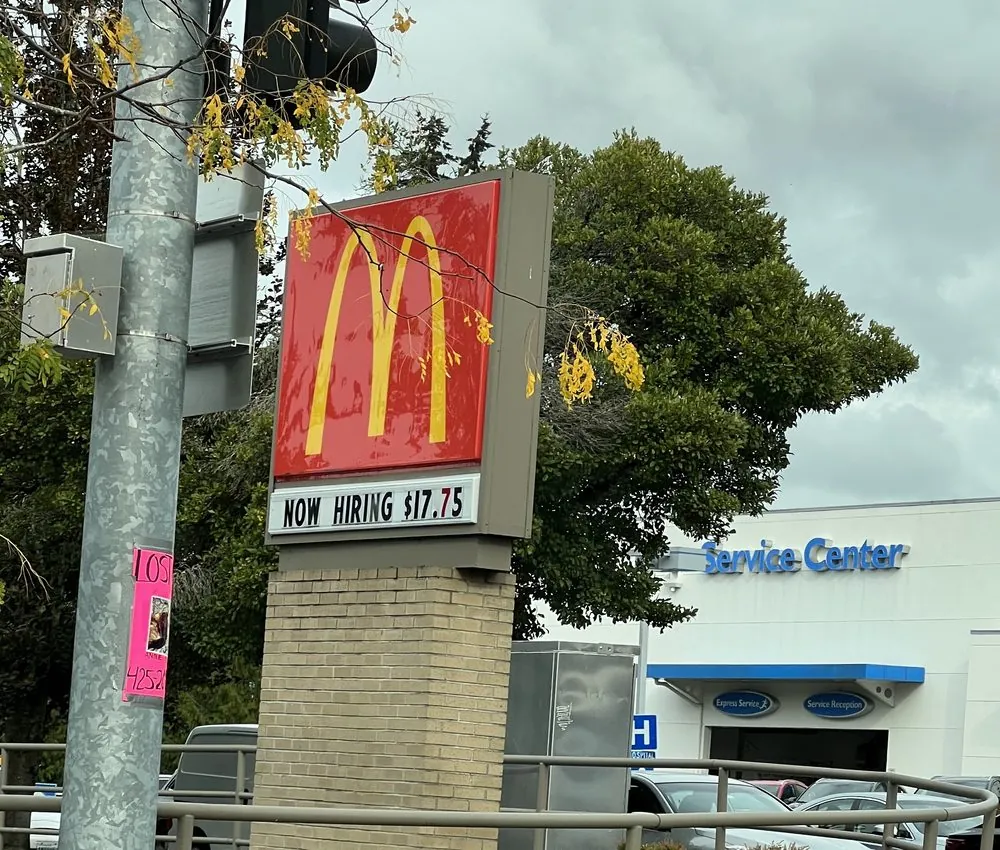
The third was a sign by the road. In the fall of 2022, outside Seattle, I passed a McDonald’s with a sign out front: NOW HIRING $17.75. I asked myself, half as a joke, whether I would rather have that job or my boss’s. Then I thought about it seriously, and the answer unsettled me. The promotion I was being prepared for was real. I no longer wanted the life that came with it.

Three different problems: work that changed nothing, a sense of value that school had trained into me, and a ladder leading somewhere I didn’t want to go. What they share is how ordinary they are. Each can go on, in many lives, for years. And each is kept going, in part, by a sense that something is moving: the report gets longer, the grades keep coming, the title gets bigger.

I’ve come to believe that most of us spend a large part of our working lives inside that sense of motion. We do work that produces the evidence of work, and we mistake it for results. We learn in ways that produce the evidence of learning, and we mistake it for understanding. I’ll call these fake work and fake learning, and they are connected. Long before our first job, school trained our sense of what counts as good work, and we carry it into the office. That is a large part of why fake work is so hard to see from the inside: it looks exactly like what we were taught good work looks like. Both fool the same thing, our feeling of progress, and that is why they last so long. This book is about what happens to them now, and about what will last when AI can blow it all up.

Why now

For a long time, the evidence of work was worth something, because it was expensive to make. It at least proved that someone had spent the time and the effort. Managers learned to read it. Schools learned to grade it.

Artificial intelligence breaks that arrangement. AI can now produce something that looks like those thirty-six pages in a minute or two. It can write the code, the report, the strategy deck, the polished answer to the exam question. It makes the feeling of progress nearly free. When work-shaped output costs almost nothing, the shape of the work stops proving much. A polished document no longer shows that someone thought. A working prototype no longer shows that someone learned.

The subtitle of this book has a double meaning, and I intend both. To blow something up can mean to inflate it. It can also mean to destroy it. My prediction is that AI will do both to fake work. First it will inflate it: more reports, more decks, more prototypes, more evidence of effort than anyone can read. Then, over a decade or two, and unevenly, because institutions change slowly, it will destroy much of what that evidence was worth.

What keeps its value is harder to produce, and it is where this book is going. Real work is work that could fail, at something that matters to someone who depends on it. It starts with a question worth asking, because the question decides more than the effort. It is made with craft: the feel that tells an engineer, a product manager, or a writer that something is wrong before they can say why. That feel can’t be written down, so no one can download it, and no machine can acquire it on your behalf. It grows slowly, through work that answers back, and it belongs to the person who grew it. And at its best, real work compounds. What it leaves behind keeps paying off long after the day it was done.

Learning and doing call for different standards. When you need to get something done, use every honest help you can find, including AI. When you’re trying to learn, keep the part that matters in your own hands, because the feel grows only in the person who does the work.

What this book is

This is a book of ideas. Most of the evidence for them comes from what happened to me, because that is the evidence I can vouch for. The stories are there to show each idea at work: what it looked like from the inside, before I had a name for it.

Part One is about fake work: what it is, and why it survives so well, from a single report to an ordinary working day. Part Two is about AI and work: how AI will first inflate fake work and then empty it of value, and what that means for a career. Part Three goes back to school, where I learned the habits that make fake work feel natural, looks at what AI is now doing to learning, and follows those habits into work. Part Four is about what will last: work that can fail, the question worth asking, the craft nobody can hand you, and work that compounds.

I’m not writing as someone who has escaped the game. I did a great deal of fake work, some of it very well, and I was rewarded for some of it. I still catch myself doing it. What I can offer is an account from inside: from someone who got good at the game, kept collecting its rewards, and only slowly noticed that the scoreboard and the purpose had come apart.

Each chapter ends with a short takeaway: the idea I would most want you to keep from it.

The way this book was made puts some of its ideas into practice. If you’re curious, I describe it at the end, in the Afterword. I’d suggest reading that last. By then you’ll have your own judgment of the book, and what I say there will mean more.

The first chapter goes back to that document, and to the question I couldn’t answer.

A free PDF of the Prologue and Chapters 1–3, 47 pages. No email needed.
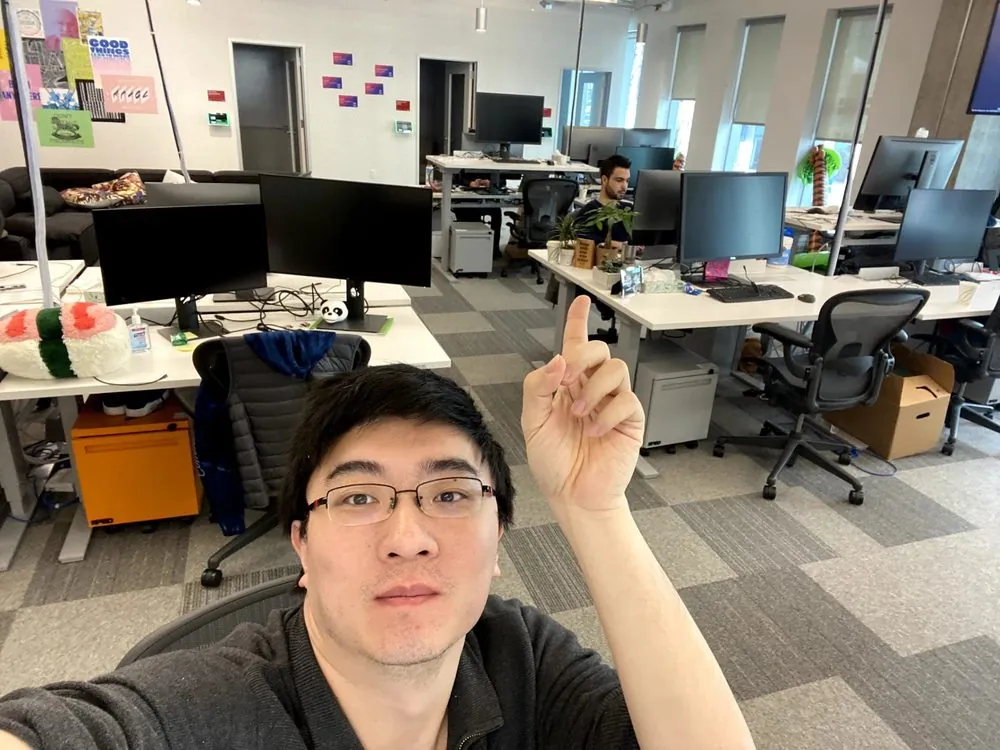
Yuzheng Sun taking a selfie in Facebook’s Seattle office, pointing up; posters on the wall behind him
At Facebook’s Seattle office on March 4, 2020, days before it closed for the pandemic. The rocking-horse poster at top left says “Don’t mistake motion for progress.”

Inside the book

A book of ideas, in four parts

Stories from Amazon, Facebook, and Tencent, and from a grocery business he ran in graduate school, show each idea at work. Each chapter ends with a short takeaway: the one idea worth keeping.

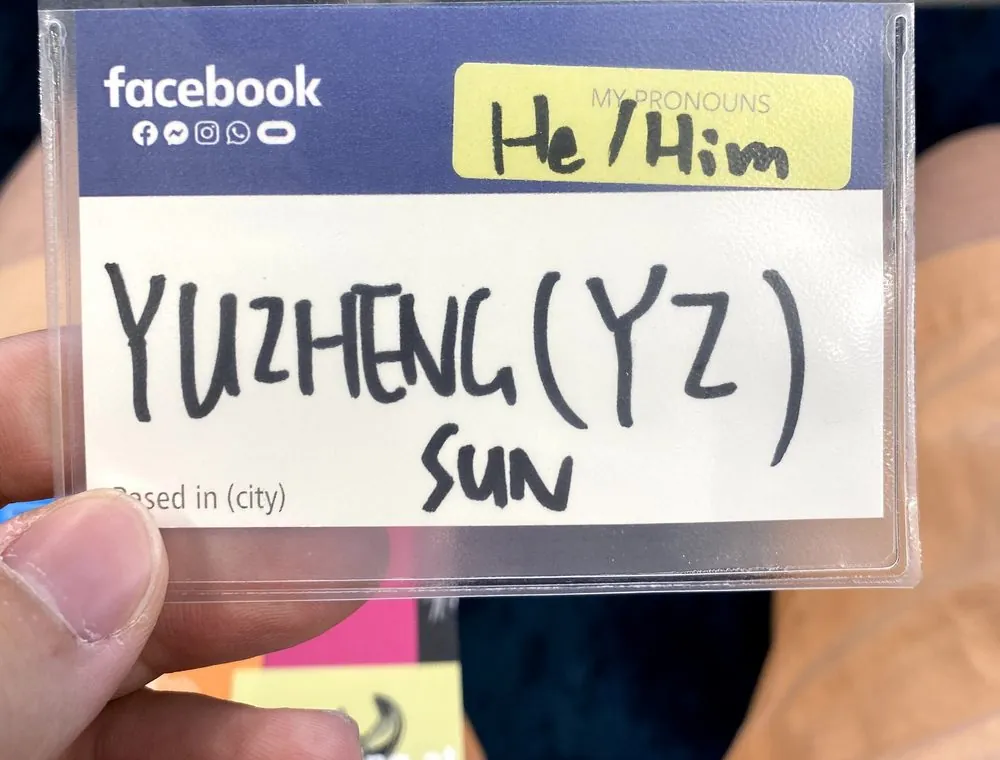
  1. A Facebook new-hire name badge that reads Yuzheng (YZ) Sun
    New-hire badge, Facebook, September 2019

    Part One

    What Fake Work Is

    A goal you will hit regardless of what you do is not really a goal. It’s a weather report.

    1. 1The Thirty-Six-Page Report
    2. 2A Metric That Measured Itself
    3. 3Set Up for Failure
    4. 4The Ten Percent
  2. A McDonald’s sign by the road that reads NOW HIRING $17.75
    The sign that made me rethink a promotion I was on track for. Kirkland, Washington, October 2022

    Part Two

    When AI Blows It Up

    What stays expensive is defining the problem, making the judgment, and owning the result.

    1. 5Boom, Then Bust
    2. 6The Default Path
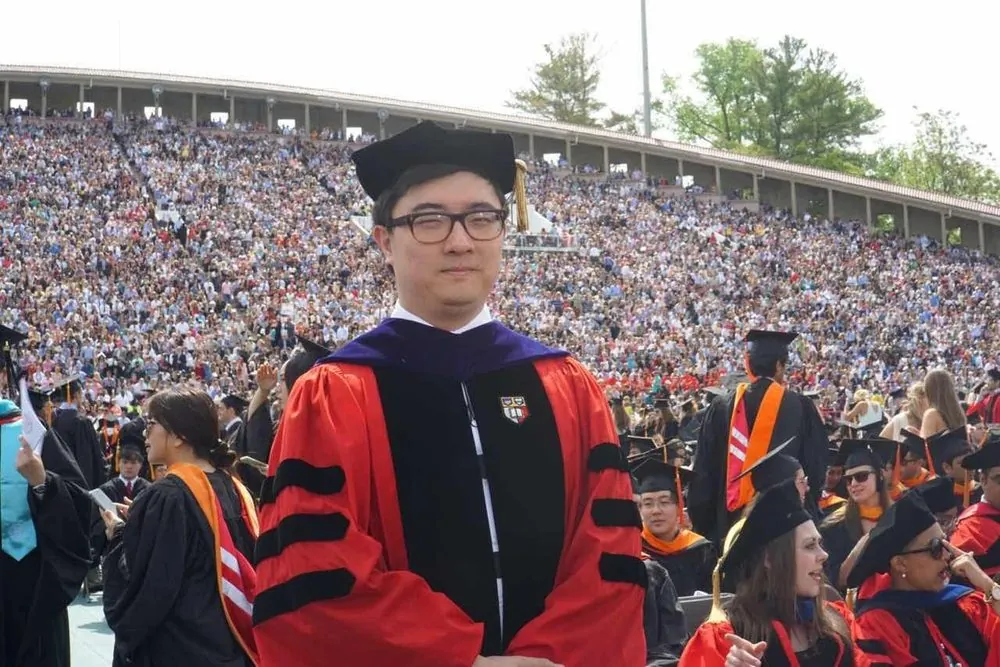
  3. Yuzheng Sun in doctoral robes in the stadium at Cornell’s commencement
    Commencement at Cornell, May 2017

    Part Three

    Where It Comes From: Fake Learning

    An exam is the one place built so that every question has a correct answer. Work has better and worse, but almost never a correct answer waiting to be found.

    1. 7Standard Parts
    2. 8Exam Rules
    3. 9The Other Side of the Table
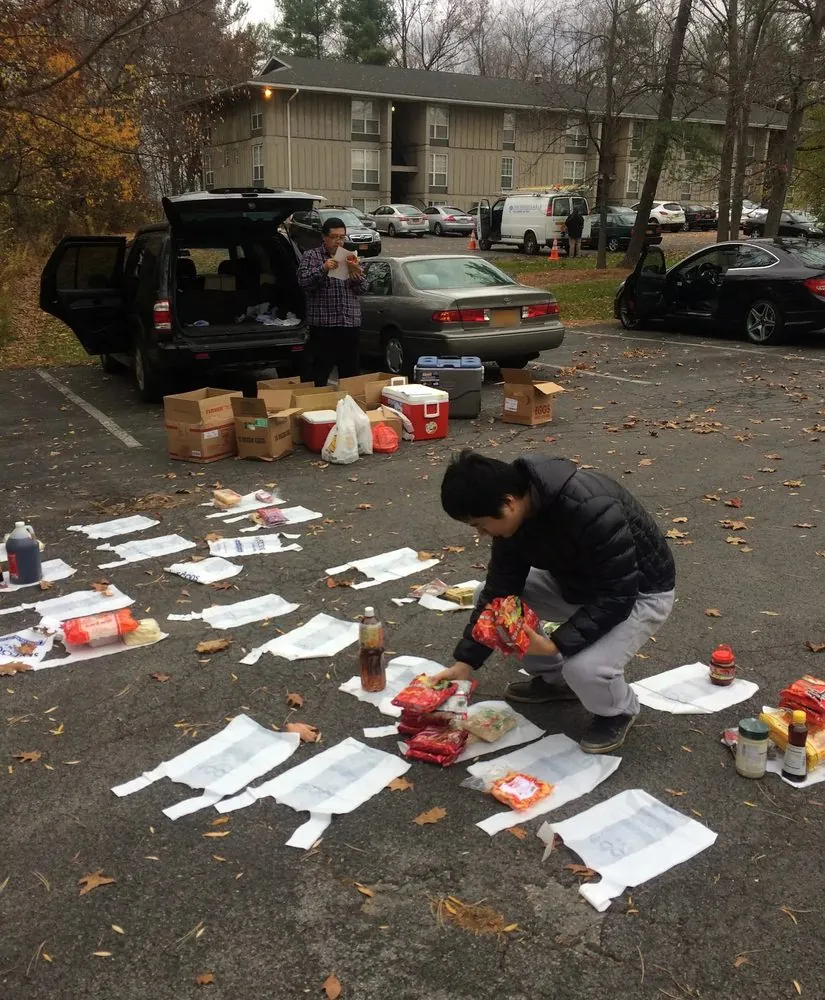
  4. Grocery orders being sorted on a parking lot, the back of a car open beside them
    Sorting a College Grocery delivery near Ithaca, November 2015

    Part Four

    What Will Last

    The better AI gets at answering, the more it matters to be good at asking.

    1. 10Real Work Can Fail
    2. 11Choose the Question
    3. 12What Can’t Be Written Down
    4. 13Make What Lasts

Also in the book: Prologue: The Prize · Epilogue: A Free Afternoon · Afterword: How This Book Was Made · Notes

About the author

Yuzheng Sun

Yuzheng Sun

Yuzheng Sun, PhD, is the founder of Superlinear Academy, where more than 20,000 people learn to build with AI and have shared more than 700 projects. He teaches its AI Builders course, which has taught more than three thousand paying students and is rated 5.0 out of 5 on Maven.

After a doctorate in economics at Cornell University, he worked as an economist at Amazon, a data scientist at Meta, and a vice director of data and AI at Tencent’s games group, where he led a team of about thirty, and was an early member of Statsig, the team later acquired by OpenAI.

Since 2020, under the name Kedaibiao Lizheng, he has hosted more than two hundred long conversations, with guests including Databricks cofounder Reynold Xin, Cursor’s head of design Ryo Lu, OpenAI’s CTO of Applications Vijaye Raji, and the hosts of Acquired. His channels have more than 400,000 followers. He coauthored Growth Data Analytics Playbook, on the Wall Street Journal’s 2025 CIO Journal reading list, and wrote a book in Chinese, Real Stuff. He lives in Seattle with his wife and son.

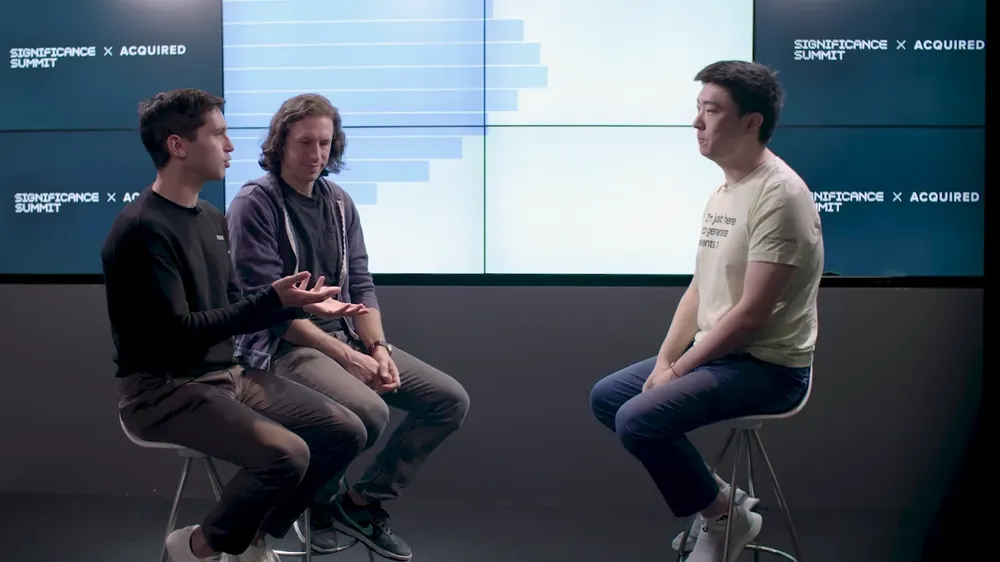
Yuzheng Sun on stage with Ben Gilbert and David Rosenthal of Acquired at Significance Summit
With Ben Gilbert and David Rosenthal of Acquired · Significance Summit

How this book was made

Most of this book existed before it was a book

The stories, ideas, and judgments are Yuzheng’s, from six years of his talks and writing, nearly all in Chinese.

A book used to take years. His last one in English, Growth Data Analytics Playbook, took about two. The first complete version of this one took an afternoon: Claude, made by Anthropic, translated and drafted it from his videos and writing.

That was the experiment. When work-shaped output gets cheap, its shape stops proving much, and a book is no exception. The only way to judge this one is by what it says.

Everything after took far longer. He directed the argument and made the decisions, and a second model, from OpenAI, checked each chapter against his own words. His last book’s publishing service allowed four rounds of revision. This one went through eleven versions.

Whether something was made with AI is a fact about how it was made, like the length of a report or the polish of a deck. It describes the shape, not what’s inside.

From the Afterword

Versions

  1. Version 11Oct 20, 2026

    Rebuilt around its ideas after his read-through. AI now comes second, so the book shows how AI changes work before it turns to what will last, and the part on school explains why fake work is so hard to see from the inside. Each chapter ends with a short takeaway, and each story is told once, in thirteen chapters instead of fourteen. The Afterword now explains the book as an experiment. Also three details corrected against his own words, and details that felt random now either show how they connect or are gone.

  2. Version 10Oct 18, 2026

    Chapter 10: a clearer account of work no one can grade, and the pull toward work you can report. The Prologue and the back cover now lead with the book’s question, and the Afterword says plainly how the book was made.

  3. Version 9Oct 18, 2026

    Chapter 7 rebuilt around nouns and verbs: what you can list, and what you can do. Chapter 10 draws on Real Stuff, his book in Chinese. His note: some central lines were too abstract.

  4. Version 8Oct 17, 2026

    Edited again from the first page to the last.

  5. Version 7Oct 17, 2026

    Rebuilt as a book of ideas in four parts, with the stories as evidence. His note: the best ideas came too late, so it read like a memoir.

  6. Version 6Oct 17, 2026

    Cut three passages that set a minimum standard for learning, so one idea carries the argument.

  7. Version 5Oct 17, 2026

    Rewrote what the book says is worth learning, around the craft that can’t be written down. His note: it was too shallow.

  8. Version 4Oct 17, 2026

    Added the Afterword: how this book was made.

  9. Version 3Oct 16–17, 2026

    Added photographs from his own collection, and corrected the text against them: the McDonald’s sign said $17.75, not the $17.50 he remembered. The subtitle became “…What Will Last When AI Can Blow It All Up.”

  10. Version 2Oct 16, 2026

    A second model, from OpenAI, compared each chapter with his videos and posts and flagged details to check. He decided what was too private to print, and added one story: the four people he laid off at Tencent.

  11. Version 1Oct 16, 2026, 12:23–1:27 p.m.

    The first English draft, from the transcripts of about forty of his videos: a prologue, fourteen chapters, an epilogue, and notes. More than forty thousand words.

Version 11 is the current one. Spotted a mistake? Tell Yuzheng.

Get the book

The paperback of Feels Like Progress

Paperback and ebook

Paperback
180 pages · 5.5 × 8.5 in
$18.88
Amazon
Ebook
With the photographs in color
$8.88
Kindle

New essays from Yuzheng: his newsletter on Substack.

For press, podcasts, and bookstores

  • Press kitAbout the book and the author, what it argues, nine interview questions, and lines from the bookPDF · 2 pages
  • Sell sheetOne page for bookstores and librariesPDF · 1 page
  • CoverThe front cover, 1600 × 2560 pixelsJPG · 243 KB
  • Author photoYuzheng SunJPG · 211 KB
  • Advance reader copyAn uncorrected PDF for reviewers and podcast hostsOn request

Interviews, podcasts, and review copies: yz@superlinear.academy